Essay · 4 min read
The 2026 smartphone stress test: which dress pockets actually fit a phone
If a dress has a pocket but that pocket can't hold a modern smartphone without sagging the hemline, swinging against your thigh, or sliding out the moment you sit down, it isn't a pocket. It's a decorative pouch. The word "functional" has done a lot of marketing work in the last few years, and a lot of it doesn't survive contact with an actual phone.
So here is the standard we use, and how we test it before any dress on this site earns the top tier.
The Phone-Fit standard
A pocket only earns Phone-Fit Verified if it clears three checks. None of them are exotic. Most pockets on most dresses fail at least one.
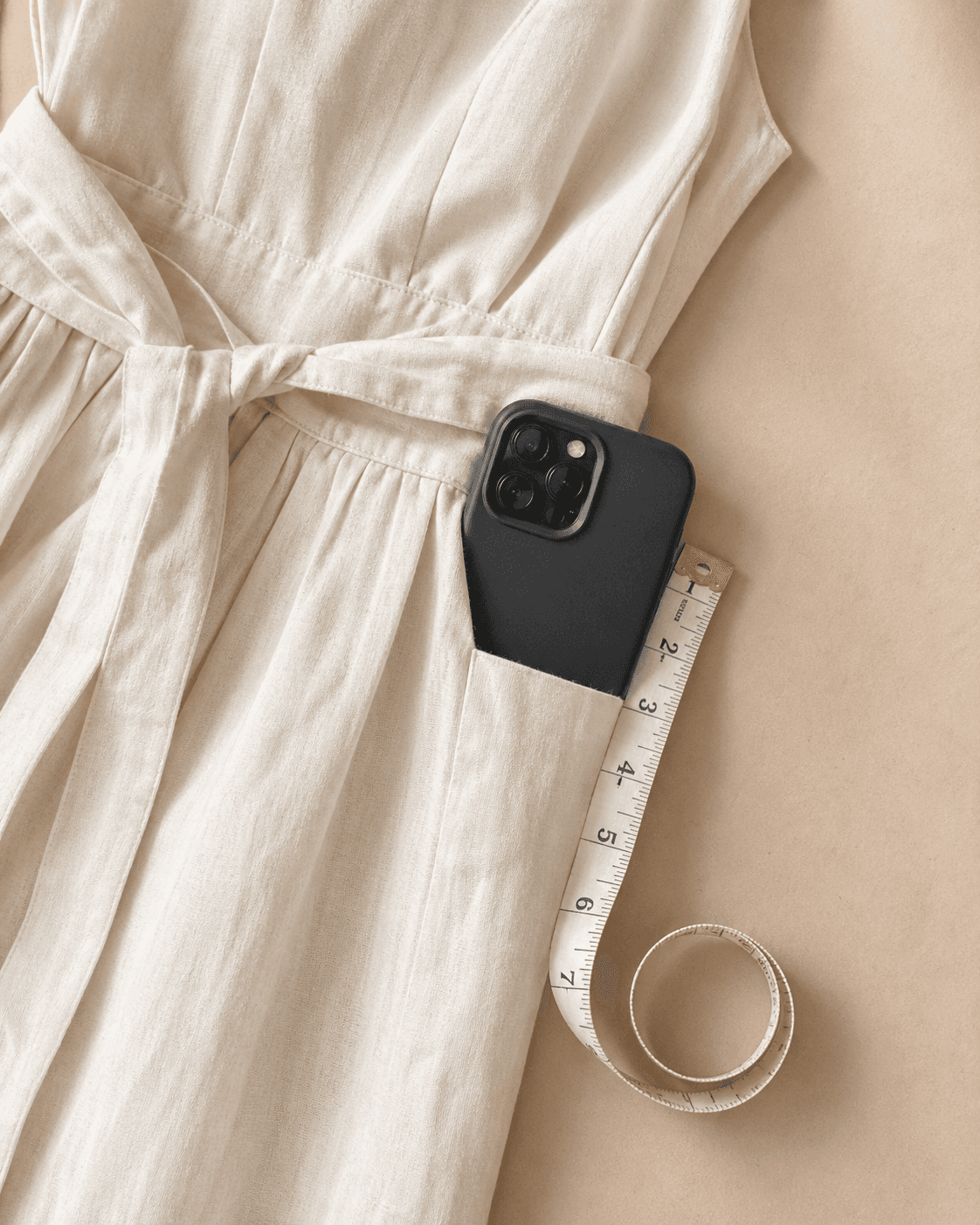
- Depth. At least seven inches of vertical clearance, measured from the top of the opening to the inside seam. Anything shallower means the phone sits at an angle, ready to slide.
- Stability. Reinforced side seams so the weight of the phone doesn't pull the pocket away from the body or set it swinging while you walk.
- Closure or fold. Either a hidden zip, a button, or an envelope-style fold deep enough that the phone can't walk its way out when you bend, sit, or climb a flight of stairs.
Why most "pocketed" dresses fail
The most common failure isn't a missing pocket. It's a four-inch slit cut into a thin jersey side seam, with no reinforcement and no closure. It looks like a pocket in the product photo. It holds a lip balm. It cannot hold a phone, and the moment you put one in, the dress hangs wrong.
The second most common failure is fabric weight. A real phone-fit pocket needs a fabric with enough body to hide the rectangular bulge — structured cotton, ponte, mid-weight linen, denim, twill. A lot of beautifully designed dresses in lightweight rayon or thin jersey simply can't carry a phone without telegraphing it through the silhouette, no matter how the pocket is sewn.
Neither of these is the designer's fault, exactly. They're the predictable result of pattern-makers being trained to treat pockets as a feature you justify rather than one you assume. The cost is borne by the person trying to find a dress that holds her phone.
How we score it
Every product on this site sits on a four-tier Pocket Confidence Scale:
- Pocket Mentioned. The retailer's copy says the dress has pockets. We haven't seen evidence beyond that.
- Pocket Likely. Product photos, reviews, or construction details strongly suggest a real working pocket, but we haven't confirmed dimensions.
- Pocket Verified. A photo, review, or measurement confirms a functional pocket that holds everyday essentials.
- Phone-Fit Verified. Explicit evidence that the pocket meets the depth, stability, and closure tests above with a modern smartphone in it.
The tiers exist because honesty about evidence is more useful than a marketing label. A Pocket Mentioned tag is fine; it just isn't a promise. A Phone-Fit Verified tag is a promise, and we'd rather have fewer of them than over-claim.
How to actually find one
The fastest path: open the Phone-Fit Verified filter and let the scale do the filtering. Every dress in that view has cleared the three checks above.
If you want to widen the net, drop down to Pocket Verified — confirmed working pockets where we may not have phone-specific evidence yet. Useful when you're shopping for a smaller phone, or when a structured fabric makes the closure question less urgent.
Pocket integrity is the new sustainability
Pocket-washing — the use of "has pockets!" as a marketing line for pockets that don't actually work — is a small dishonesty, but it adds up. Every time a shopper buys a dress on the strength of a pocket and finds out at home that the pocket is decorative, the trust in the word erodes a little further. The fix isn't hand-wringing. It's a scale, and the discipline to only mark something verified when it actually is.
Don't get tricked by a pocket detail. Use the scale. Know the fit.